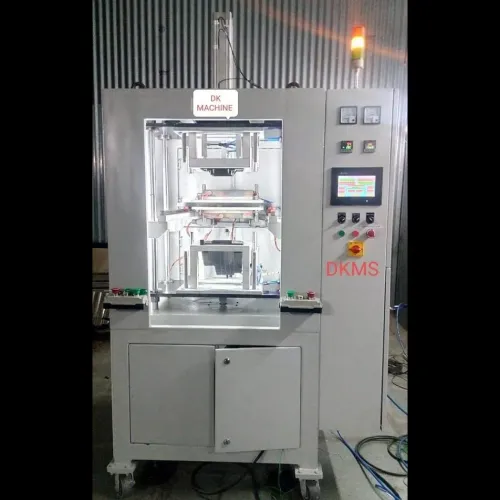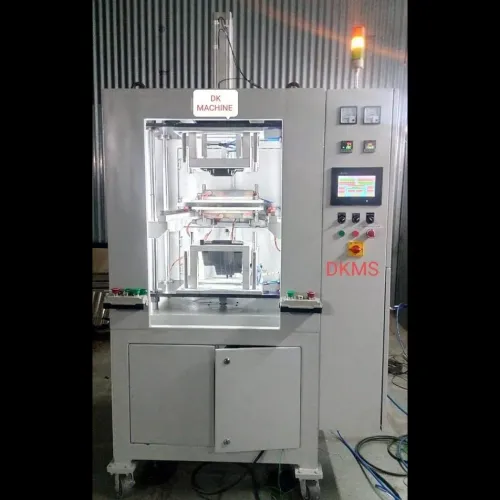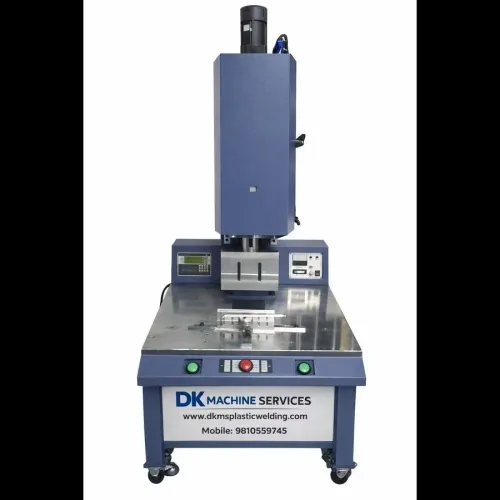
When plastic components need to be permanently assembled with strong, precise, and repeatable joints, heat staking is an effective joining technology for many industrial applications. A Heat Staking Plastic Welding Machine uses controlled heat and pressure to soften selected areas of a thermoplastic component and form a secure mechanical joint with another part. This process is widely used where manufacturers need consistent assembly quality, clean finishing, and reliable production performance.
DKMS Plastic Welding provides industrial plastic welding solutions designed for manufacturers looking for dependable and application-specific plastic joining equipment. Heat staking technology can be adapted to different component designs, materials, production volumes, and assembly requirements.
What Is a Heat Staking Plastic Welding Machine?
A heat staking plastic welding machine is an industrial assembly machine that joins thermoplastic components by heating specific plastic sections until they become sufficiently soft for forming. A controlled tool then reshapes the softened plastic around or over a mating component, creating a permanent mechanical connection after cooling.
Unlike conventional fastening methods that may require screws, clips, or additional hardware, heat staking can integrate the fastening feature directly into the plastic component. This can simplify assembly and provide a clean finished appearance.
How Does Heat Staking Work?
The heat staking process begins by positioning the plastic components and any required insert or mating part in a fixture. A heated staking tool is then brought into contact with the designated plastic feature. The heat softens the thermoplastic material without requiring the entire component to be heated.
Once the material reaches the required forming condition, controlled pressure and tool movement reshape the plastic around the mating component. The tool is then withdrawn and the newly formed joint is allowed to cool and stabilize. Temperature, heating time, pressure, displacement, and cooling conditions can be controlled according to the component and production requirements.
Key Benefits of Heat Staking Technology
Heat staking can provide manufacturers with a repeatable assembly process for suitable thermoplastic components. Because the process concentrates heat at specific joining points, it can help maintain the appearance and dimensional integrity of the surrounding component.
The process can also reduce dependence on separate mechanical fasteners. This may help simplify component design, reduce assembly steps, and support automated or semi-automated production.
For manufacturers producing large quantities of identical components, controlled heat staking can provide consistent joining conditions from one production cycle to another.
Applications of Heat Staking Plastic Welding Machines
Heat staking machines can be used for a wide range of thermoplastic assembly applications. Typical applications include plastic housings, electrical components, automotive interior and exterior parts, electronic assemblies, appliance components, plastic panels, switches, connectors, and other molded plastic products.
The appropriate machine configuration depends on the component geometry, plastic material, number of staking points, required cycle time, joint design, and production volume.
Industries Using Heat Staking Machines
Heat staking technology can be useful across several manufacturing sectors where plastic components need permanent assembly. Automotive manufacturers can use the process for selected interior, electrical, and plastic component assemblies. Electronics and electrical manufacturers can use heat staking for housings, connectors, switches, and other assemblies.
Consumer appliances, industrial equipment, plastic products, and specialized component manufacturers may also benefit from heat staking where conventional fastening methods are less suitable.
Why Choose a Heat Staking Machine for Plastic Assembly?
The choice of heat staking depends on the product design and manufacturing requirements. For suitable thermoplastic components, it can provide a controlled alternative to screws, adhesives, and other assembly methods.
Manufacturers can also design plastic components with dedicated staking posts or features, allowing the joining process to become part of the product's overall engineering design. This can support streamlined assembly and reduce the number of separate fastening components.
Factors to Consider Before Selecting a Heat Staking Machine
Selecting the right machine requires more than comparing machine specifications. Manufacturers should consider the type of thermoplastic material, component dimensions, staking-point configuration, production quantity, required cycle time, heating temperature, tooling requirements, and the desired level of automation.
The design of the staking tool is particularly important because it directly affects how the softened plastic is formed. For complex components, customized tooling and fixtures may be required to achieve accurate and repeatable results.
Customized Heat Staking Solutions for Industrial Production
Different plastic products require different joining configurations. A customized heat staking machine can be developed around the component's dimensions, number of staking points, production requirements, and automation level.
DKMS Plastic Welding can help manufacturers identify a suitable heat staking configuration based on their component and assembly requirements. Application-specific tooling and fixtures can also be considered where standard machine configurations are not sufficient.
Heat Staking vs Conventional Plastic Assembly Methods
Heat staking offers a different approach to plastic assembly compared with screws, rivets, adhesives, and other fastening methods. Mechanical fasteners can add components and assembly steps, while adhesives may require curing time and controlled handling conditions.
Heat staking uses the thermoplastic component itself to create the finished joint. For applications where the material and component design are suitable, this can provide an efficient and repeatable assembly process.
Why Choose DKMS Plastic Welding?
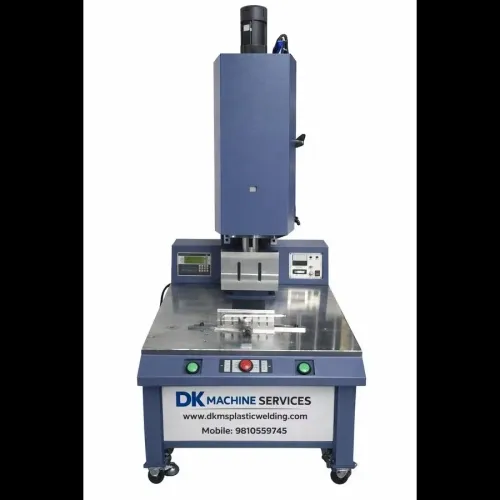
DKMS Plastic Welding focuses on industrial plastic joining and welding equipment for manufacturing applications. The company provides solutions for different plastic assembly requirements, including ultrasonic welding and other specialized plastic joining technologies.
For manufacturers evaluating heat staking equipment, the machine should be selected according to the actual component, material, joint design, production volume, and required automation. Discussing these parameters with an experienced machine manufacturer can help identify an appropriate configuration.
Frequently Asked Questions
What is a heat staking machine used for?
A heat staking machine is used to permanently assemble thermoplastic components by heating and reshaping specific plastic features around another component or insert.
Which plastics can be heat staked?
Many thermoplastics can be suitable for heat staking, but the actual suitability depends on the material properties, component design, staking geometry, and required joint strength.
Is heat staking suitable for mass production?
Yes. Heat staking can be suitable for high-volume manufacturing when the component design, tooling, machine configuration, and process parameters are properly optimized.
Can heat staking replace screws?
For some applications, heat staking can replace screws or other mechanical fasteners. The suitability depends on the product's structural, service, and assembly requirements.
Can the heat staking machine be customized?
Yes. Machine configuration, fixtures, tooling, heating arrangements, and automation can be customized according to the component and production requirements.
Get the Right Heat Staking Solution for Your Plastic Components
If you are looking for a Heat Staking Plastic Welding Machine Manufacturer in India, selecting equipment based on your actual component and production requirements is essential. Share your plastic component details, material, staking-point requirements, and production volume with DKMS Plastic Welding to discuss a suitable industrial heat staking solution.
Primary Keyword: Heat Staking Plastic Welding Machine Manufacturer in India
Secondary Keywords: Heat Staking Machine Manufacturer, Plastic Heat Staking Machine, Heat Staking Machine for Plastic Components, Industrial Heat Staking Machine, Plastic Welding Machine Manufacturer India, Heat Staking Equipment, Thermoplastic Heat Staking Machine
Suggested Meta Title: Heat Staking Plastic Welding Machine Manufacturer in India | DKMS
Suggested Meta Description: Looking for a Heat Staking Plastic Welding Machine Manufacturer in India? Explore industrial heat staking solutions for reliable and repeatable plastic component assembly.
Suggested Internal Links: Ultrasonic Plastic Welding Machine, Digital Ultrasonic Welding Machine, Heat Staking Machine, Ultrasonic Horn, Ultrasonic Hand Gun Welding Machine, Plastic Welding Solutions
Keywords